
Too Many Choices, Too Few Sales: What Muvv's Guided Shopping Experience Gets Right
TL;DR
How a guided digital simulator turned a complex B2B catalog into pre-qualified leads, and what that means for your own sales funnel.

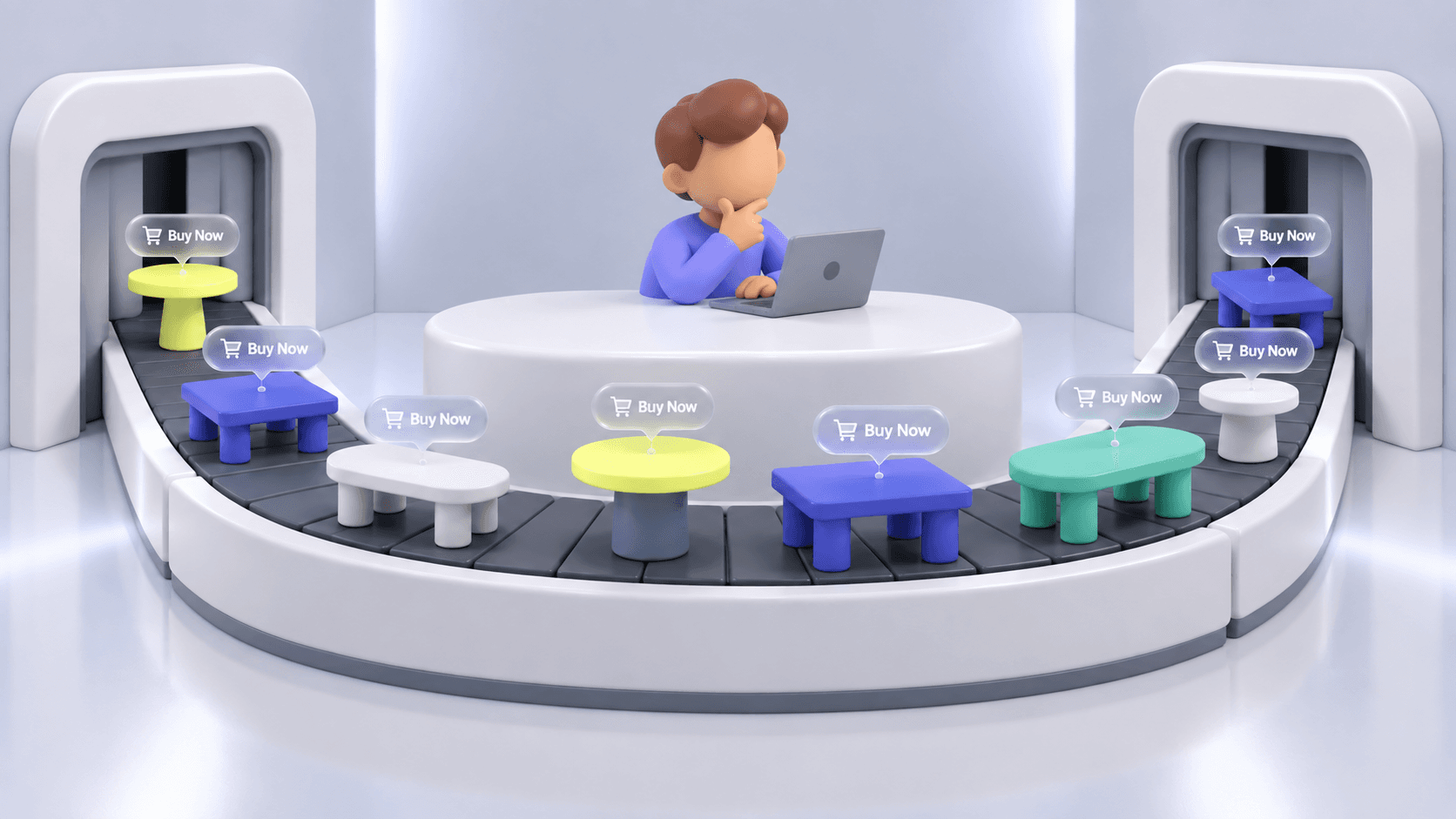
In 2000, researchers Sheena Iyengar and Mark Lepper ran a now-famous experiment in a California grocery store: shoppers presented with 24 varieties of jam were far less likely to buy than those shown just 6. More choice did not mean more sales. It meant more hesitation, and often, no purchase at all. That finding was made in a supermarket aisle, but it describes almost exactly what happens on a B2B website when a buyer lands on a sprawling technical catalog with no clear starting point.
Modern B2B buyers no longer want to browse endless product pages, apply a dozen filters, or fill out a generic “Contact Us” form and wait. They want a fast, confident answer to a specific problem. When a company sells custom or highly configurable products and exposes that complexity all at once, the result is what psychologists call decision paralysis: faced with too many options and too little guidance, the buyer simply leaves the page. For a business, that is not a minor UX inconvenience. It is a lead that never entered the pipeline.
This is the problem a Shopping Tailored Experience is built to solve: a digital journey that adapts to each user's needs in real time, step by step, instead of dumping the entire catalog on them at once. Hypnotic applied this approach to Muvv, a Synere Group brand, and the result is a useful case study in what guided digital qualification actually looks like in practice.
The Hidden Cost of Complexity in B2B Sales
When a company sells custom solutions or maintains a large, technical catalog, showing everything at once does not read as transparency. It reads as noise. The traditional fix for this has been to push the entire qualification burden onto the sales team: long email threads to understand what the client actually needs, calls scheduled purely to filter out unqualified requests, and manual, back-and-forth quoting before anyone knows whether the deal is even viable.
That model does not fail because the sales team is doing anything wrong. It fails because the qualification work is happening at the most expensive point in the funnel, with a human, instead of the cheapest. Every hour a sales rep spends untangling a vague inbound request is an hour not spent closing an already-qualified one, and every buyer who abandons a confusing catalog before reaching out never even makes it onto that list. The fix is not to add more sales headcount or simplify the catalog until it stops representing what the company actually sells. It is to move the qualification intelligence into the digital channel itself, without losing the human handoff at the moment it actually matters.
Muvv's Case: From Static Catalog to Guided Simulator
Muvv's digital transformation project had a clear brief: eliminate manual back-and-forth and improve the quality of the leads reaching the sales team. Rather than building a conventional ecommerce layout or another static request form, Hypnotic designed an Interactive Product Simulator centered entirely on guiding the user to a decision, not just showing them a catalog.
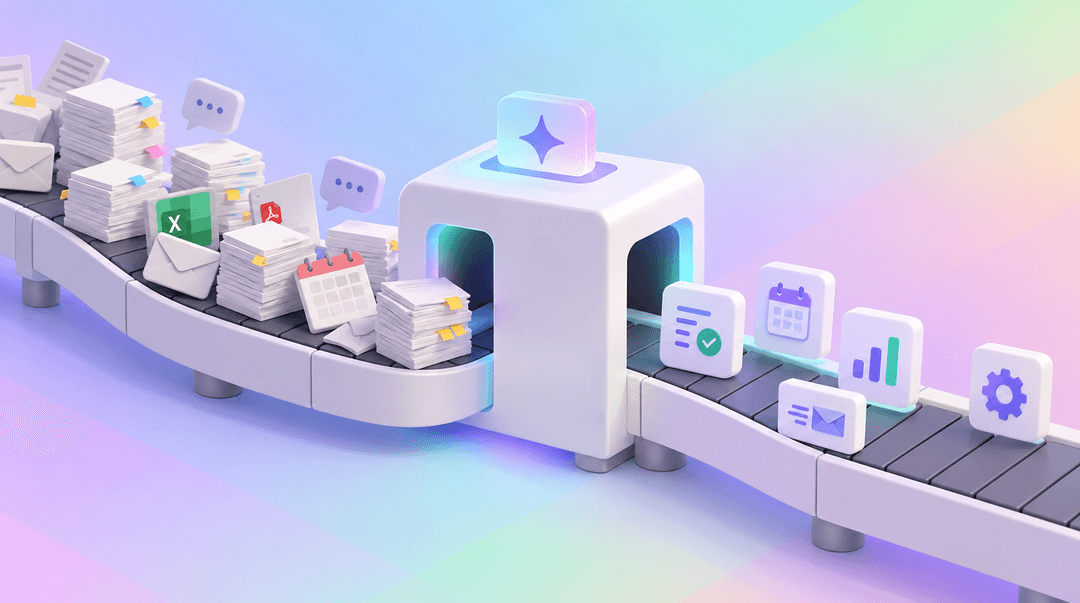
The simulator works through three connected mechanisms. First, an intuitive decision tree asks the user a short series of plain-language questions about their scenario and requirements, with the visible options adapting dynamically to what is actually available in the catalog in real time, so no one is ever offered a configuration that does not exist. Second, an automatic triage step reads those answers and instantly recommends a standard product when the request fits one, or flags it as a custom project the moment the user selects “Other” or describes a need the catalog does not cover. Third, a seamless handoff sends every submission, standard or custom, directly into HubSpot with the complete history of the user's answers attached, so the sales team receives a fully qualified, categorized lead rather than a blank inquiry. In practice, this means the interface is never doing the job of a salesperson. It is doing the job that used to sit in someone's email inbox: figuring out what the buyer actually needs before a human ever has to ask.
The Business Case for a Tailored Shopping Experience
A guided experience like Muvv's changes the shape of the sales funnel, not just the look of the website. Leads arrive already qualified: by the time a sales rep opens the contact, they already know the context, the technical requirements, and roughly the scope involved, which means the conversation can start at the negotiation stage instead of the discovery stage. Manual data entry and clarifying emails largely disappear, because the qualification and structuring work that used to consume a rep's morning is now handled automatically the moment a form is submitted.
Buyers also convert at a higher rate for a simpler reason: being guided toward the right answer builds more trust than being handed a wall of options and left to sort it out alone. And because the simulator sits inside the same digital ecosystem as the rest of the storefront, a company like Muvv can run a fast-quote flow for new prospects and a private, closed Shopify B2B portal for recurring customers side by side, without maintaining two disconnected systems.
Digitizing a commercial process does not mean putting every product into an online store and hoping the buyer finds their way. It means understanding how that specific buyer actually decides, and building the digital tool that mirrors that decision path instead of working against it. The most useful diagnostic a business can run today is not “how many products are in our catalog,” but “where, specifically, does a qualified buyer give up before contacting us.”
If that drop-off point is a page with too many options and no clear next step, the fix is not a redesign of the page. It is a guided flow, backed by CRM integration, that turns browsing into qualification before a human ever has to get involved. Companies that treat their website as a triage tool, not just a shelf, will spend less time filtering unqualified leads and more time closing the ones that were already worth having.
Want to transform your company's sales process?
Hypnotic builds digital ecosystems and custom simulators that connect the user experience directly to your CRM and ecommerce systems. Contact us to discuss your funnel.
Sources
- Iyengar, S. S., & Lepper, M. R. (2000). “When Choice is Demotivating: Can One Desire Too Much of a Good Thing?” Journal of Personality and Social Psychology, 79(6), 995-1006.
- Case details and process description based on Hypnotic's direct work on the Muvv (Synere Group) digital transformation project.
Tags
Services used
Author

Web Developer
Tiago Nunes is a Web Developer with over 11 years of experience creating websites and digital experiences. With a strong focus on performance, usability, and detail, he brings design and technology together to build digital products that are both engaging and effective.