
From Idea to Market in the AI Era: Why Distribution Is the New Differentiation
TL;DR
Execution is no longer the bottleneck in product development. In the AI era, differentiation comes from positioning, distribution, and product thinking—not just building.

The way digital products are built has fundamentally changed.
According to McKinsey, generative AI could add up to $4.4 trillion annually to the global economy, largely by accelerating tasks like coding, content creation, and research.
At the same time, AI can improve productivity in product development roles by up to 40%, significantly reducing time-to-market.
But here’s the paradox:
While building products is becoming easier, building successful products is not.
We are entering a new phase of digital product development—one where execution is commoditized, and differentiation shifts elsewhere.
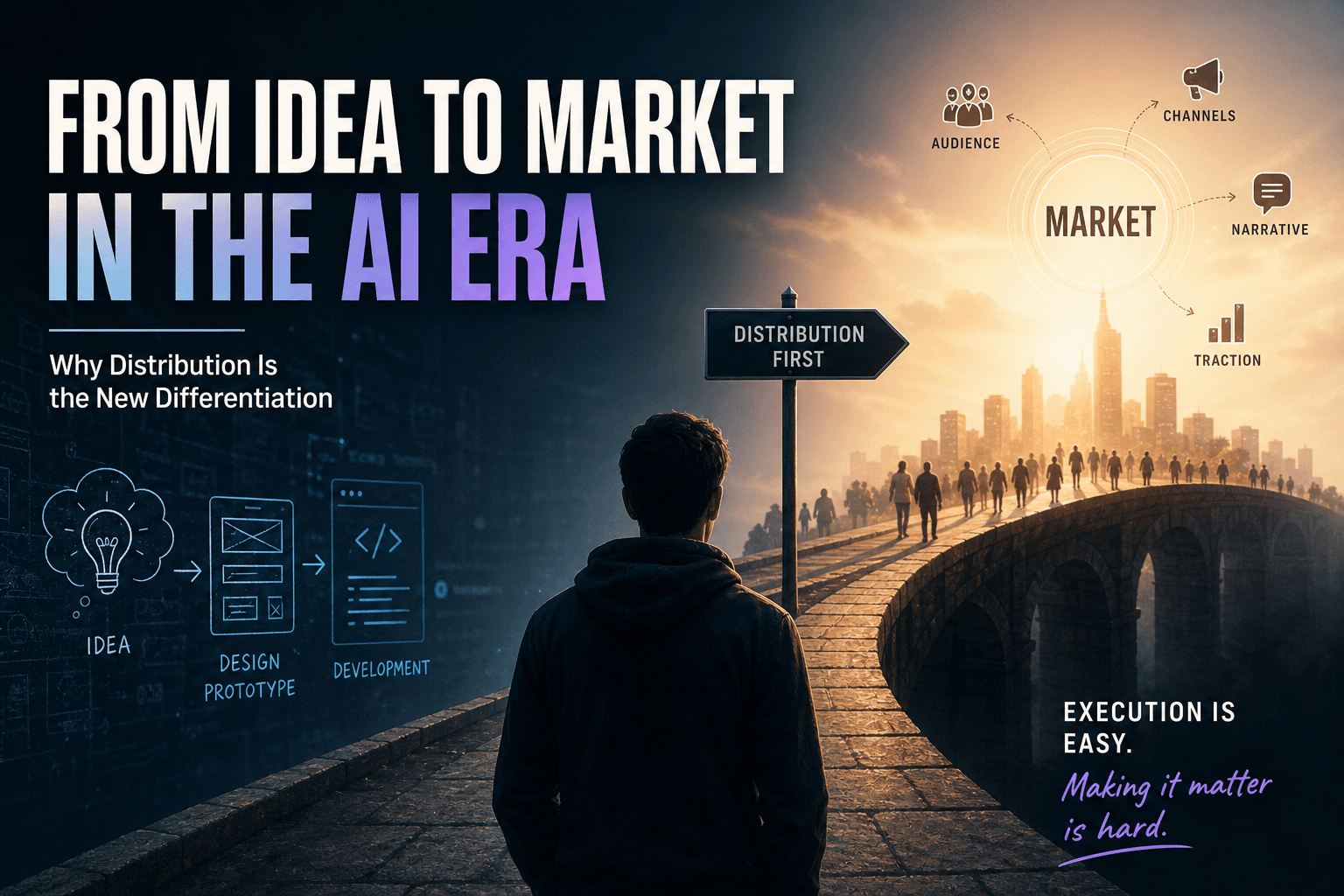
The Traditional Product Lifecycle (Pre-AI)
Historically, product development followed a predictable structure:
- Conception
- Design & Prototyping
- Development
- Commercialization
The bottleneck was clear:
- Limited engineering resources
- High cost of iteration
- Long development cycles
Ideas were abundant. Execution was scarce.

What AI Has Changed
AI has not eliminated the lifecycle — but it has compressed it.
Conception → Accelerated Ideation
AI can:
- Generate product ideas
- Analyze competitors
- Summarize market trends
This enables faster exploration—but also introduces a new problem:
Many people are now generating the same ideas.
AI tends to converge toward average, pattern-based outputs.

Design & Prototyping → Instant “Good Enough”
With modern tools:
- Interfaces can be generated in minutes
- UX flows can be scaffolded automatically
- Copy is instantly produced
Result: - The baseline quality of design has increased
- But differentiation has decreased

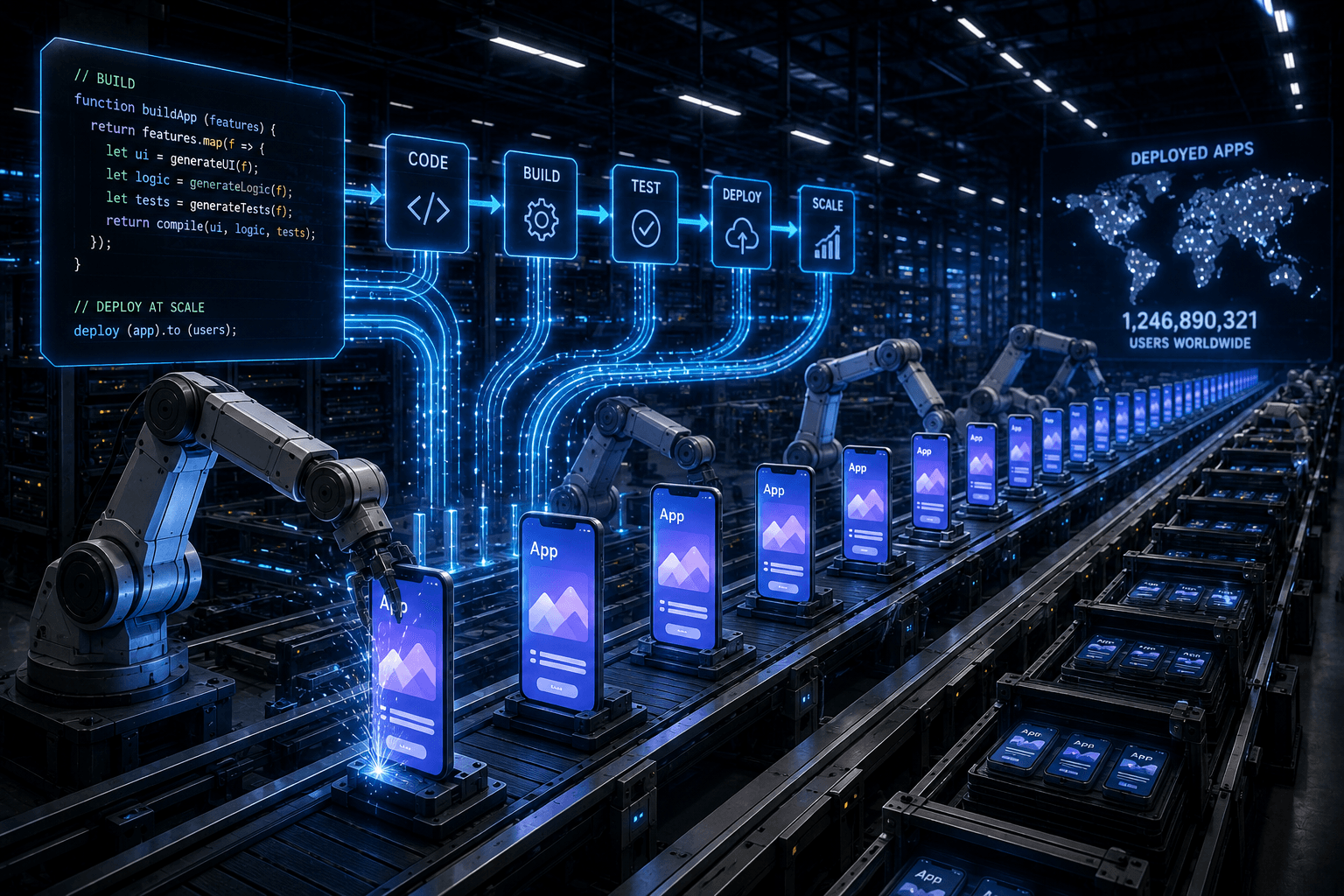
Development → Execution at Scale
AI-assisted coding:
- Reduces engineering effort
- Speeds up scaffolding and iteration
- Enables smaller teams to build faster
In many cases, the constraint is no longer technical.
- It’s no longer “Can you build it?”
- It’s “Should this exist at all?”
Commercialization → Still the Hardest Problem
AI can help with:
- Ad copy
- Content generation
- Campaign ideas
But it does **not solve**:
- Distribution
- Positioning
- Trust
- Product-market fit
And this is where most products fail.

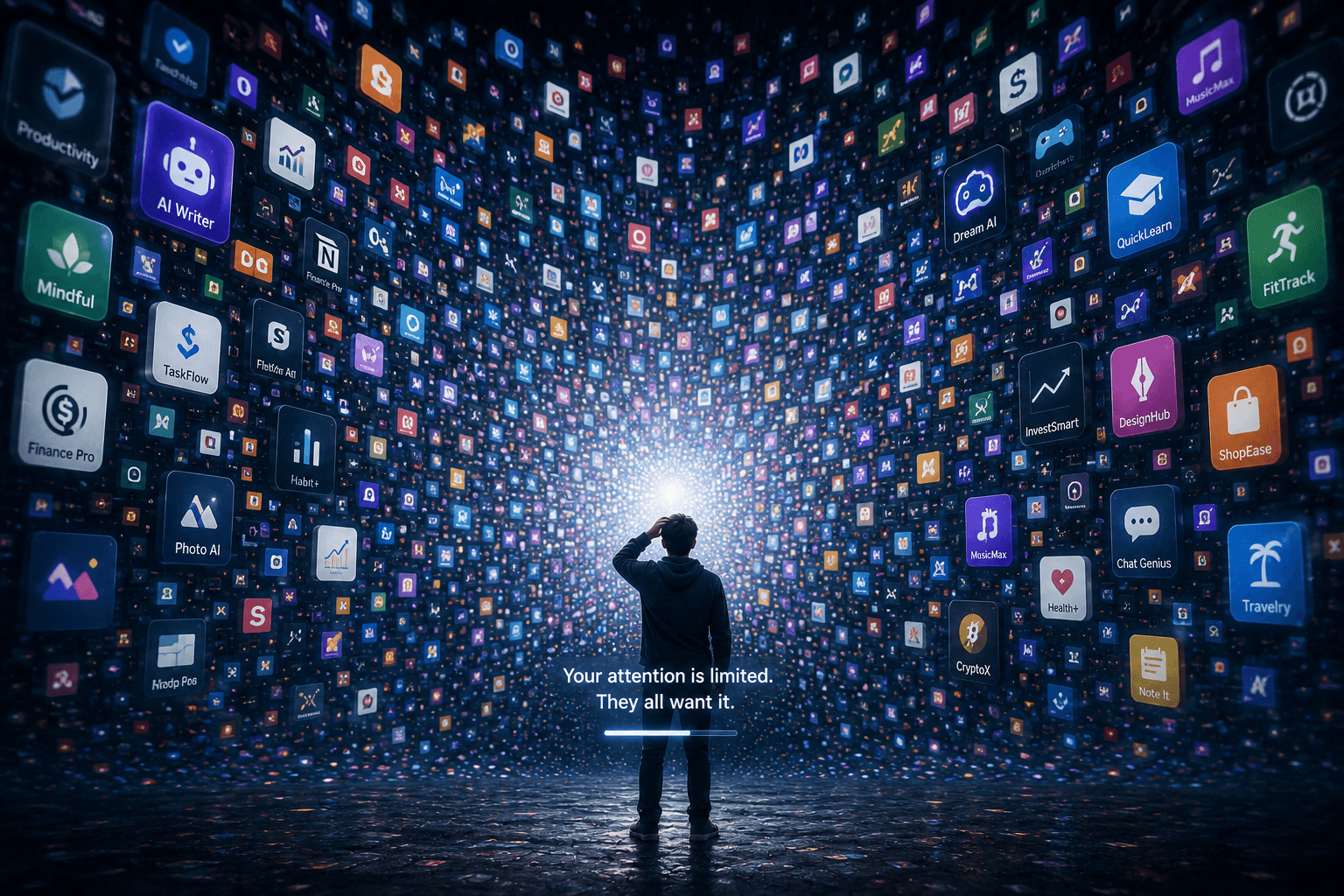
The New Reality: Infinite Products, Finite Attention
AI has dramatically increased supply:
- More products
- Faster launches
- Lower barriers to entry
But demand has not increased at the same rate.
This creates a fundamental shift:
The scarce resource is no longer execution.
It’s attention.
Fictional Case Study: The Habit Tracker App
Let’s make this concrete.
Scenario: Fully AI-Driven Approach
You ask AI:
“Build a habit tracker app.”
You’ll likely get:
- Clean UI
- Standard features:
- Daily tracking
- Streaks
- Notifications
- Generic onboarding
- Predictable UX
Result:
- A functional product
- Indistinguishable from hundreds of others
This is what happens when:
You delegate thinking — not just execution — to AI.
Where It Fails
The product lacks:
- A clear audience
- A differentiated value proposition
- Emotional or behavioral insight
It becomes part of the noise.
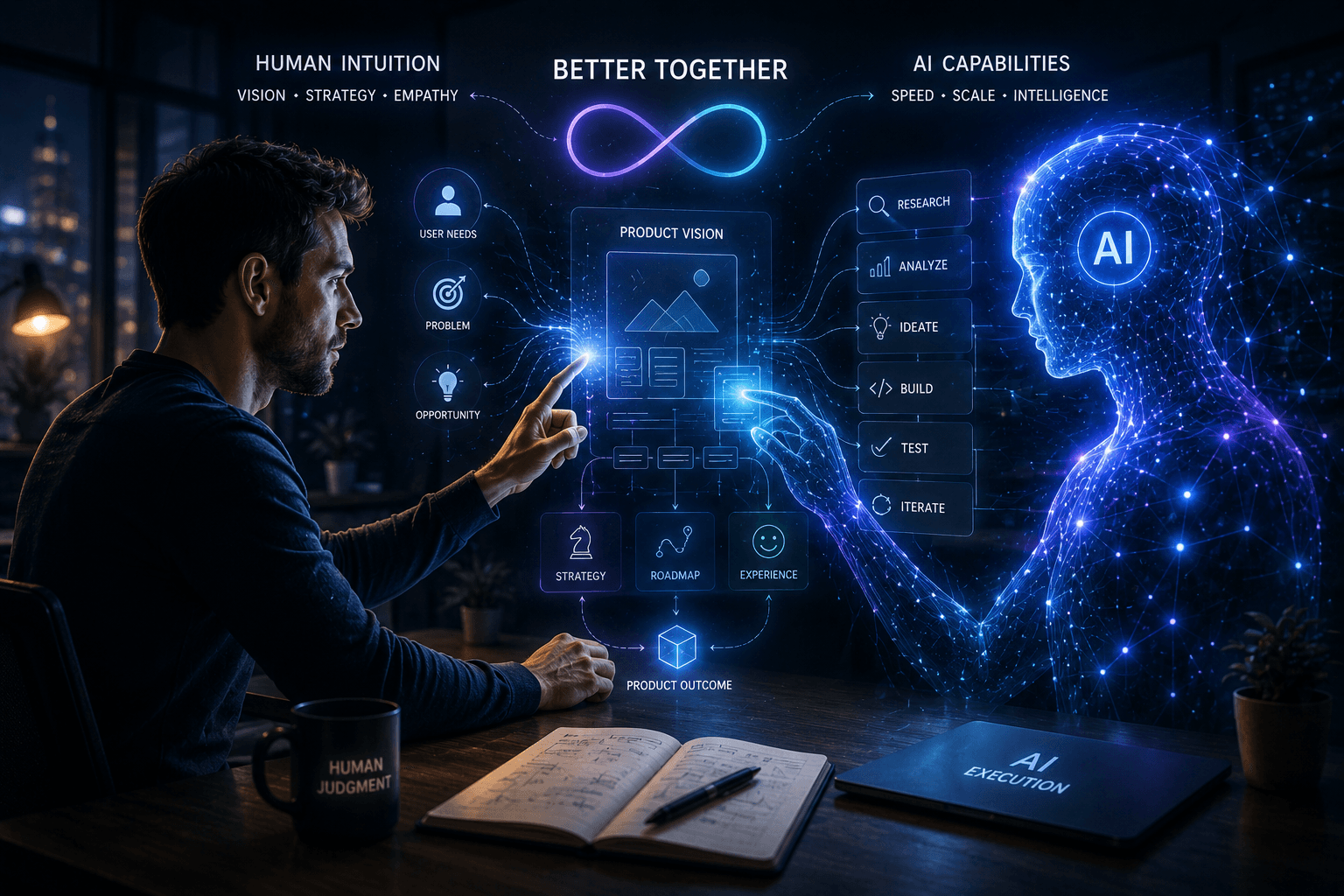
A Better Approach: Human + AI Collaboration
Now, introduce human judgment:
- Target: burnout-driven professionals
- Insight: habits fail due to cognitive overload, not discipline
- Product angle:
- Fewer habits, deeper focus
- AI-assisted prioritization
- Adaptive routines instead of rigid streaks
Now AI becomes:
- A tool for execution
- Not a replacement for thinking
Making It Sellable
To stand out, you shift focus to:
- Positioning
Not “habit tracker” but:
“A system for people who are tired of productivity systems” - Narrative
Speak to pain:- Overwhelm
- Burnout
- Decision fatigue
- Distribution
Content strategy:- Essays on burnout
- LinkedIn thought leadership
- Founder-led storytelling
- Product Experience
- Opinionated UX
- Clear philosophy
- Consistency across touchpoints
From Product to Market: Why Distribution Comes First
What this habit tracker example exposes is not just a product flaw—it reveals a structural shift.
Even with a solid idea and a well-executed product, success is no longer guaranteed by building alone. The difference between another forgotten app and a successful product lies in what happens before and around the build.
This is where a new approach emerges.
Distribution-First Products
Instead of:
Build → then try to sell
The new model is:
Distribute → validate → build → scale
What “Distribution-First” Means
You start with:
- Audience
- Channels
- Narrative
Before:
- Writing code
- Designing features
In the habit tracker example, this would mean:
- Testing messaging around burnout and cognitive overload
- Publishing content before building the product
- Understanding what resonates before committing to features
Why This Works
Because:
- Distribution reduces product risk
- Feedback loops become immediate
- You validate demand before investing in development
Most importantly:
You’re not building in isolation—you’re building in context.
Where Differentiation Lives Now
If distribution becomes the starting point, then differentiation naturally shifts with it.
It no longer lives in:
- Features
- UI polish
- Technical complexity
Because AI is flattening those layers.
Instead, differentiation emerges from how well you connect product, narrative, and market.
1. Taste and Judgment
- Deciding what not to build
- Avoiding AI-generated sameness
- Making opinionated product decisions
2. Positioning
- Clear, specific audience
- Strong point of view
- Language that resonates
Without positioning, distribution doesn’t convert.
3. Distribution
- Owning channels: SEO, social, community
- Building audience before product maturity
- Creating ongoing touchpoints
This is the core of distribution-first thinking:
Products don’t find users—distribution brings users to products.
4. Product Thinking
- Understanding real user problems
- Iterating based on feedback loops created through distribution
- Building coherence across experience
5. Brand and Trust
In a saturated market:
- Brand becomes a filtering mechanism
- Trust reduces decision friction
And increasingly, trust is built before the product is fully formed.
The Real Shift: From Builders to Product Strategists
This transformation is not just about tools—it’s about roles.
As AI reduces the cost of execution, the leverage moves away from pure builders and toward those who can define direction and create demand.
| Before AI | After AI |
|---|---|
Execution was scarce | Execution is abundant |
Builders had leverage | Strategists have leverage |
Technical skill | Judgment + distribution |
McKinsey reinforces this idea: most companies are still using AI to accelerate existing workflows rather than redesign them, limiting real impact. Source
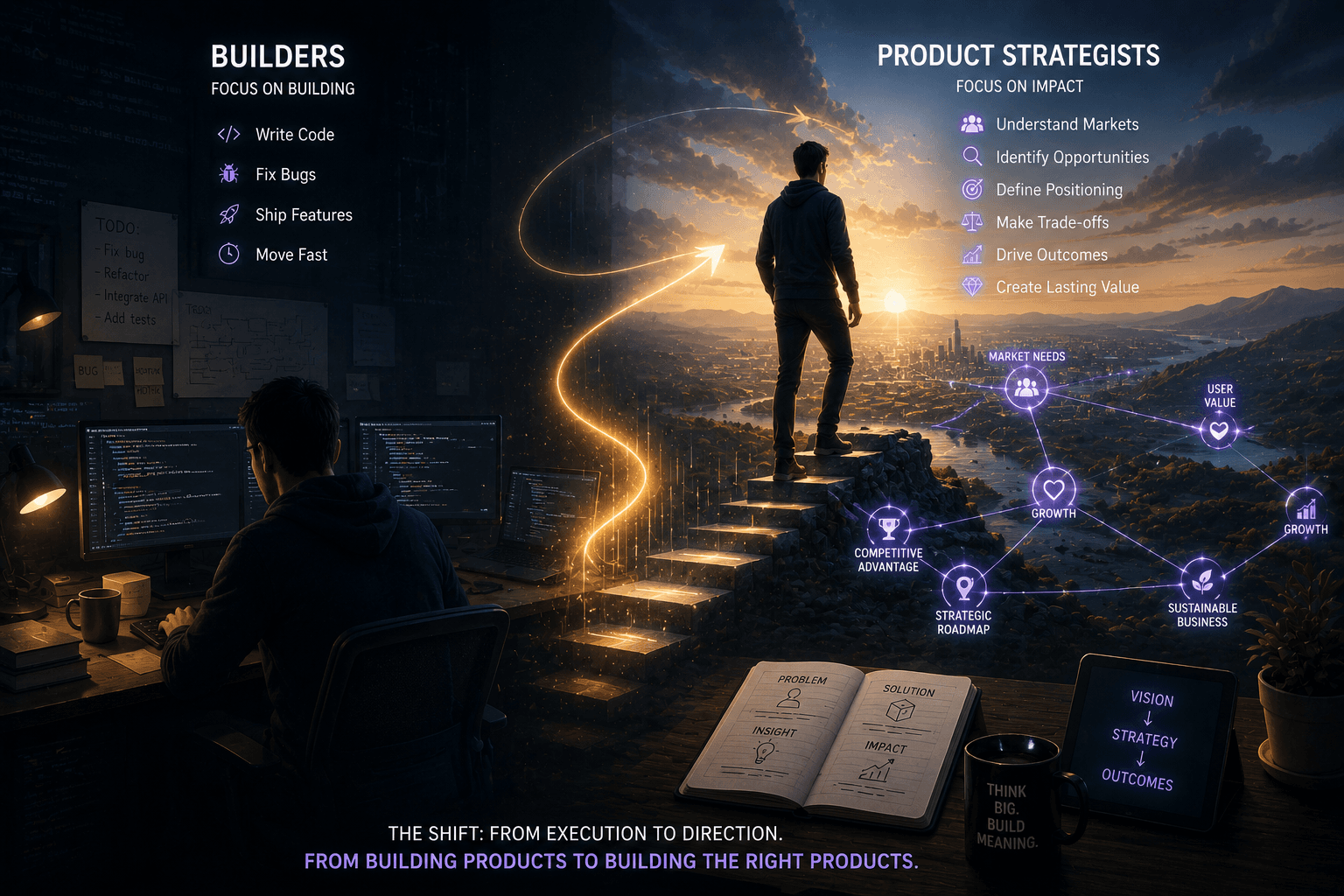
The implication is clear:
The most valuable capability is no longer building products—it’s understanding what should exist and how it reaches people.
Practical Framework: Building in the AI Era
If execution is no longer the bottleneck, then the process itself must evolve.
This framework reflects a distribution-first, AI-augmented approach to product development.
Step 1: Start with distribution
- Identify audience and channels
- Test narratives and messaging early
Step 2: Validate demand before building
- Conversations, content engagement, early signals
- Avoid building in a vacuum
Step 3: Use AI to accelerate execution
- Ideation, prototyping, development
- Maintain human control over direction
Step 4: Build fast
- Ship early versions
- Reduce time between idea and feedback
Step 5: Iterate with real market input
- Use distribution channels as feedback loops
- Refine product based on actual usage
Final Thought
We are no longer limited by our ability to build.
We are limited by our ability to choose, position, and distribute what we build.
AI has lowered the barrier to execution—but raised the bar for relevance.
In a world where anyone can launch a product:
Are you sure you know what to build?
Tags
Services used
Author

Founder & CTO at Hypnotic
15+ years of experience across multiple categories and disciplines in the digital world. With a strong expertise in web and mobile development, team and project management, marketing development and execution, business development and agency operations in general. Vast and deep knowledge on various programming languages and frameworks, both old-school and modern, both backend and frontend (full stack development), employing a great passion and creativity in every project.