
Digital agencies: what has changed — and what will continue to differentiate them
TL;DR
How digital agencies are evolving — from execution-focused models to a more strategic future shaped by specialization, automation, AI, and clearer value propositions.


For many years, talking about digital agencies meant talking about websites, branding, campaigns, and online presence. Their role seemed relatively clear: helping brands and companies enter the digital space with strategy, coherence, quality, and strong execution.
Today, that definition no longer feels sufficient. The sector has become more fragmented, more complex, and harder to summarise under a single category. More than a simple update in services, something deeper is at stake: agencies are redefining the role they want to occupy. This transformation is not just a market perception. According to McKinsey, 71% of organisations already use generative AI in at least one business function, and the companies capturing the most value from this technology are not just testing tools — they are redesigning workflows, structures, and ways of operating.
When digital was still new
The growth of digital agencies happened at a time when many brands were still learning how to exist online. Having a website, a consistent digital identity, or a campaign designed for the digital environment became essential to building credibility and relevance.
In that context, an agency’s value lay in its ability to bring together different capabilities to respond to new and urgent needs. Agencies acted as translators between brands and the digital environment: they took strategy, identity, and communication and turned them into concrete, functional, and coherent experiences. It is also from that phase that the legacy of craft still present in some agencies comes from — in other words, care, detail, and excellence in creative execution.
A sector that no longer moves in a single direction
If the past was easier to define, the present is not. Today, “digital agency” has become too broad a label to describe very different realities.
You only need to look at how different agencies present themselves. Hypnotic defines itself as a technology-first creative agency. Bürocratik positions itself in the territory of digital branding and craftsmanship. Significa presents itself as a digital product design & development agency, while Untile presents itself as a digital product development studio. These differences are not just a matter of language. They reveal distinct value propositions.
The sector is no longer moving in a single direction. Some agencies continue to build relevance through brand, experience, and creative quality. Others move closer to product, engineering, and business problem-solving. Others still seek to combine creativity, technology, performance, and systems within a broader model.
That is why the present of agencies is a present of specialization. It is no longer enough to say you “do digital.” What matters now is making clear what kind of problems you solve, what territory you occupy, and what value you deliver.
In a context where automation, AI, and so many tools are making execution faster and more accessible, what will truly continue to differentiate an agency?
When adapting is no longer just about adding services
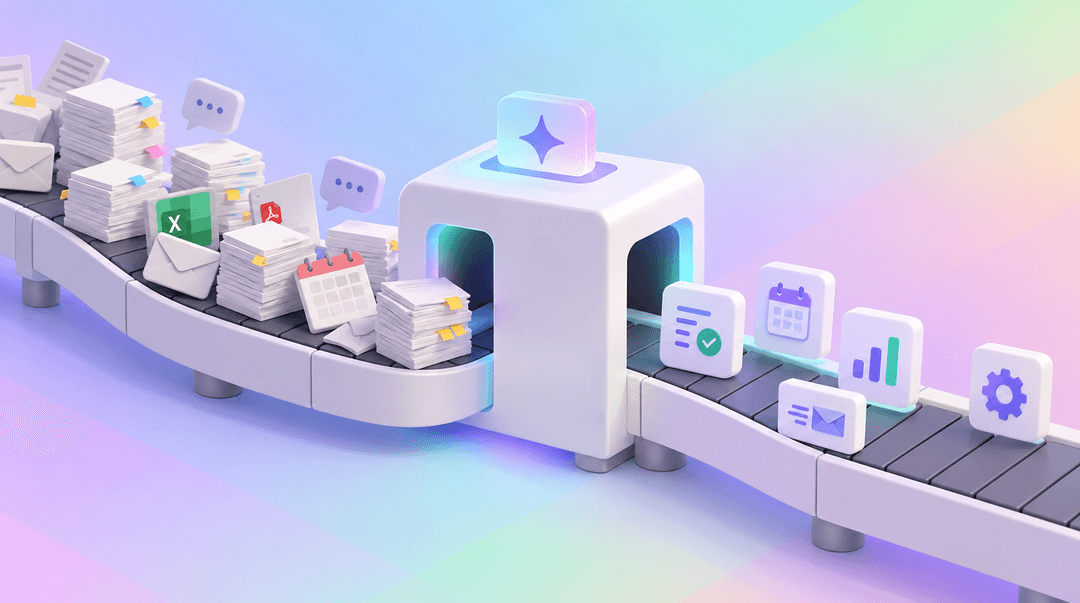
It is easy to look at the future of agencies and reduce everything to artificial intelligence. But that reading feels reductive. The issue is not only who is using AI, nor who is communicating it better. The real question is different: how is each agency reorganising its model in order to remain relevant when execution is no longer the main differentiator?
International examples help make this clearer. Monks reinforces a logic of AI-first marketing and created Monks.Flow, an operational layer with AI and specialised agents. DEPT® integrates AI into a broader AI Transformation proposition. AKQA, meanwhile, seems to take a more organic approach, framing AI as a natural extension of its intersection between imagination and technology.
This reading is also consistent with what other market analyses suggest. Deloitte, for example, frames AI-driven automation as a way to bring efficiency, creativity, and precision to personalization, content, and service at scale. The same Deloitte article also notes that 40% of brands expect to use GenAI tools in their business, suggesting that this shift is no longer just a trend, but an expected direction of travel. In other words, the issue is not only producing faster, but reorganising the way value is created and delivered.
What these examples show is that adaptation to the future is not happening in just one way. In some cases, AI is absorbed into the main brand. In others, it becomes a dedicated practice, an operational layer, or a broader transformation engine.
This is also where Hypnotic becomes particularly interesting. By positioning itself as a technology-first creative agency, it was already showing a more technological ambition than the traditional agency model. But the creation of Yetiman as a complementary brand, instead of treating AI simply as another service within the main agency, suggests another possibility: framing new capabilities with their own narrative, target, and structure.
The real challenge is not to change — it is to remain relevant
The future of digital agencies does not point to a single winning model, but rather to the end of ambiguity. It seems to me that there is still room for brand, for craft, for product, for technology, and for more hybrid models. What no longer seems sustainable is continuing to operate as if the quality of execution alone were enough to guarantee relevance.
In a context where automation, AI, and so many tools are making execution faster and more accessible, the real differentiator no longer lies only in the ability to do, but increasingly in the ability to justify value. That is precisely where strategic vision, judgment, and the ability to turn different capabilities into relevant solutions gain even more weight. This means that creativity is not disappearing; what is changing are the tools, the processes, and the way that value is delivered.
Ultimately, the future of agencies does not seem to lie in doing more, but in making their value clearer. Some will integrate new capabilities into their core structure. Others will shape them through practices, systems, or complementary brands. The path may vary. The requirement, however, is shared: less generalism, less ambiguity, and greater clarity about the strategic value each agency concentrates.
This is also why several industry perspectives point to a shift in the agency model itself. WARC captures this clearly by arguing that the agency of the future will need to sell solutions that are more outcome-oriented and less dependent on the traditional model of time and people.
The future of agencies will depend less on the isolated execution of services — increasingly assisted and accelerated by automation — and more on the strategic vision with which those services are conceived, integrated, and turned into value.
Sources
Tags
Author

Marketing Manager
Rita is Marketing Manager at Hypnotic. Her academic path began in architecture and later moved into graphic design, but her interests gradually shifted toward communication, strategy, and business. With experience in sales and project support, she eventually found her place in marketing. Curious by nature, she enjoys travelling and has recently made running and cycling an important part of her life.